The Twisted Serpent. Oh MY!

Titled: The Twisted Serpent. © 2025 a_joy. all rights reserved
Embarking on a Journey - An Observation Note
It’s often found in the little spaces - the nooks and crannies. It’s witnessed in the little space where the floorboards don’t quite touch or maybe it’s just somewhere in the back of the closet. It’s a place where purse dirt lives unnoticed until one day a hard brake makes the contents fly everywhere onto the car seat. It’s that moment when you discover one too many gum wrappers and little bits of scraps and weirdly enough - dust on the inside of the bag now splattered everywhere glinting in the light of day.
That’s how I discovered what I call the Twisted Serpent - a play on the event of discovery and the story that was held up as justification to meet the need of legitimization. That’s what love as violence looks like a lot of the times - a twist that looks like something that it’s not. It’s hidden under rugs, behind objects collecting dust, in dirty purses spilled over on car seats. It’s there, out in the open, but enclosed in every day absence, embraced by ambivalence, complacency, and shorn up by its garb of generalized everywhere glint. It’s negotiated and re-negotiated - often in blindness. It’s nefarious in its own way because it is taken for granted as normative, even sacred, and in an icky sort of way, good for you.
It’s not of course. Even with science data mapped out in academic research and brain scans, the human incarnation knows something is off without all the MRIs and flow charts. It whispers it in cells and systems. It dysregulates. It shows up in open hands striking and closed fists hitting. The nefarious part is when the negotiation is so entrenched, all data is erased under the weight of social order and moral insistence. Nope, love is violence and it’s good for you.
A little Glimmer of the re-negotiation
Years ago I floated around in Christian space. Because there are plenty of Protestant versions of Christianity, this particular branch was known as Charismatic. In particular, it was third wave or New Apostolic Reformation space. It’s a mix of dominion theology holding hands with Jesus loves us and wants all those seven mountains of culture over there. The mantra - we’re the head and not the tail.
They have all manner of teaching, prophecy, supernatural woo woo going on. And one of those webs of supernatural fascination is something called Prophetic Art. Prophetic art was invented by a woman named Teresa Dedmon. When I was in this space, she was affiliated with Bethel Church in Redding, California. She was also a teacher at their School of Supernatural Ministry while she maintained her own ministry around art.


She ran groups on Facebook for artists, gave conferences, and now runs something called the Kingdom Creative Movement, formerly known as Create Academy. This is in a kissing relationship with the 7 Mountain Mandate - promoted and distributed by individuals such as Lance Wallnau and Johnny Enlow and supported by large and popular churches like Bethel.
This space with Teresa Dedmon is rather interesting. I have an old .pdf brochure she put out before she moved into her present ministry name. It’s titled Your Creative Destiny Blueprint. It’s a short downloadable whose purpose is to help someone create a basic plan involving prophetic art. The version I have has no publication date so I date it based on its copyright which is 2019. In the image gallery to the right, I’ve uploaded the cover page and the second page.
What I want to point out is the re-negotiating of a bible citation she uses to give textual legitimacy to her ministry of prophetic art. It’s the proverbial purse dirt. In that citation is some love as violence peppered into a larger belief held by Bethel in general about the nature of Jesus as God, wellness/healing, and love.
I’m going to let Teresa speak for herself. You can get a glimpse of what prophetic art is through her own words. You’ll have to ignore the highlighting for a second when it comes to the descriptive page.
You’ll see down at the bottom - the last paragraph - she tells how prophetic at works. She describes her encounter with Simon Bull who ends up painting live at Tree of Life Church [see the third paragraph]. Prophetic art painting at churches like this is common during worship as is dancing and flagging. She reports how after worship she felt a prompting by the Holy Spirit to have people come look at Simon’s painting so God could heal eye problems [see the last paragraph]. Then she reports the miracles and she writes:
“This time, I introduced Simon to another way of painting with the Holy Spirit’s direction. I was able to give Simon the gift of seeing new ways his art can release physical healing” [Your Creative Destiny Blueprint].
Because this is so fantastically not in Christian tradition, scriptural legitimacy becomes more of an imperative. This was an ongoing argument [need to justify] when I was in this space and for the most part, Exodus and the building of the tabernacle was the “go to” story. When I reviewed the brochure, I was surprised see a nod to Numbers 21. This will get entangled with theological understanding of not just signs and wonders, but healing, the nature of illness, and authority over the physical realm all hugged by Bethel Church.
The Intersection
This piece cannot be separated from other parts of Bethel’s beliefs and ministry. In order to talk about how the Twisted Serpent works, I need to talk about Bethel’s healing rooms.
I’ve been there.
I won’t labor on about it, but before they take groups into their healing room operation, they basically prime people. They specifically talk about how God doesn’t make people sick and that God doesn’t want people sick. Let me say that again. They believe the following:
God isn’t responsible for any illness you may have.
God doesn’t want you to be sick, but wants you to be healed.
For the most part, illness is attributed to demonic activity. The priming is designed to make it more plausible you will be healed in the healing rooms.[1] They use scripture to back up their premises in the hope of erasing your doubt or skepticism. At the end, they provide you with teaching about how to hold onto your healing because when healing seems to end after the miracle, explanations were needed. Those explanations are mainly centered on how you can actually lose that healing through some lack of faith or extra demonic activity. So, when Teresa mentions Nos. 21 in that highlighted portion, she’s talking about Yahweh/Jesus through this lens.
I am not sure if Teresa Dedmon actually read Nos. 21 - I mean really read it especially in light of the context, the entirety of the passage, and the insistence of Bethel of the above notions about healing and illness. It’s important - prophetic art is a mechanism for supernatural healing and she’s referencing Nos.21 in light of God’s desire to heal people. She’s proving it with this text. It’s kind of an interesting passage when you’re operating a prophetic art that heals ministry.
So - Yeah - Nos. 21
Nos. 21 is the story of the bronze serpent. I’m sure you remember it but if you don’t, basically the Israelites are wandering around the wilderness bitching and complaining against Moses and God for all the shitty food and the journey. The text at verses 4-5 reads like this:

© 2025 Methodist church in Oregon. A-joy. all rights reserved
“Then they set out from Mount Hor by the way of the Red Sea, to go around the land of Edom; and the people became impatient because of the journey. So the people spoke against God and Moses: ‘Why have you brought us up from Egypt to die in the wilderness? For there is no food and no water, and we are disgusted with this miserable food’” [NET].
In the NET translation, they mention the people were “impatient” BECAUSE of the fuckery-foo journey. A great deal of extraordinarily ugly and stressful things have happened by the time you get to this passage assuming one wants to read the bible as a univocal linear history type of text of some kind.[2] As is typical for this group of people and this storyteller, they have the nerve to question the present situation as - WTF were you thinking God and Moses? You freed us to bring us - well - here? Apparently there was no food or water in that location and whatever food they had was pretty disgusting.[3]
Many - really the vast majority - of Christians re-negotiate texts across geography, space, and time. Teresa is doing that here. She’s re-negotiating a text to provide biblical certification and historical proof that Yahweh definitely heals people using “art.”
But the problem is pretty big with the passage - namely God is killing his own people for speaking against authority. That’s a no-no. So much for God not being responsible for your illness - or death for that matter.[4]
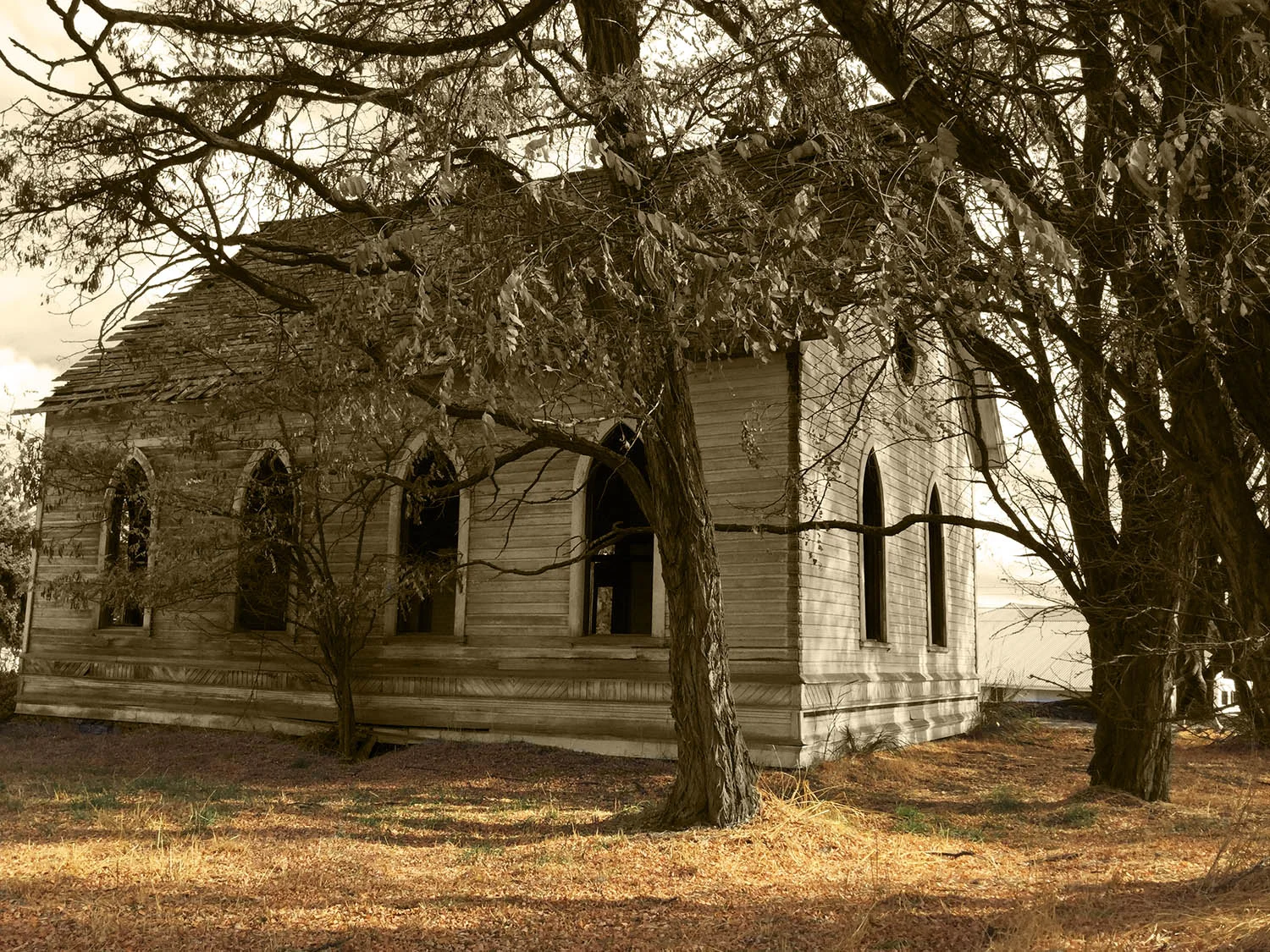
Photo by a_joy ©2025 all rights reserved
And that’s the intersection for me. In the passage, the people realize their sin and run to Moses to plead on their behalf. Moses does what Moses does, and he receives instructions to build the bronze serpent. If people look to this thing, once it’s created, they will be healed. This is Teresa’s nod to - look - art heals - to support her supernatural prophetic art ministry.
The Problem - The Curve of the Textual Twist
It’s not just twisted that Dedmon is actually using this story to prove her ministry as bilabial and therefore legitimate. Obviously the irony is problematic in light of what I just wrote and observed. It gets more complicated and more twisted.
While I’m not a biblical scholar, I do know what relationship looks like. I do have training in that space. And what I see from the passage and the history here - taking it as story through a relational lens - I see a supernatural being classed as a deity completely misreading its own creation. Traumatized people can grumble. They can be reactive. They can lose sight of much even behind a cloud pillar by day and a fire one by night. None of that is normal. All of that is hugely stimulating and it comes in aftermath and background of frequently god-based killing of neighbors, family members, and the people over there in that tent group. That’s stress after leaving an enslaved reality with a scary Pharaoh. Our nervous systems need breaks, healing, and the like. They need nurturing. It’s just how we are.
Making matters more complicated, these people have a history. That history is filled with exile and intermittent attention - at least in the stories. Absence doesn’t make the heart grow fonder in many contexts. It makes a real living space for doubt to take up room in that big armchair. But these people had a particular view of gods and being violent and demanding is obviously a trait.
The response of this deity in this situation is to kill people in spite of the aforementioned background. That’s not love. That’s not healing. That’s not safety. That’s not even an understanding of human nature. That’s a desire for obedience. That’s spice in the salsa of life - Pepper X sized spice.
Yahweh’s behavior isn’t endearing. It doesn’t build trust. It flexes the muscle of obedience. It’s proof of power. This is God people - don’t fuck with it. But, humans are incremental sorts - it’s every interaction that builds trust from infancy forward. It’s important to be good enough - not perfect- but these are communal ACE events in this religious book. After all, he calls these people his children. And heaven knows, there were children present experiencing, watching, growing, and having their brains and bodies formed around all of this violence as love and justice. This is where justice as death/punishment becomes “good for you, the community, and the land.” No, not exactly. It’s a great way to fuck up humans so profoundly they become the very problem you don’t want them to be.
Calling this deity loving is very problematic and it requires a serious stretch of what love is, how it operates, and what those outcomes are that produce healthy humans, not just happily pleased supernatural beings. If this is what love is, it explains far too much about Evangelicals and their machinations.
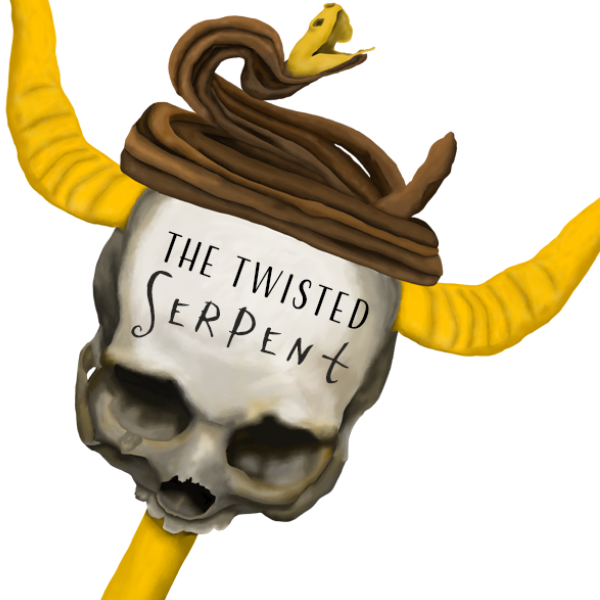
Titled: The Twisted Serpent on Pole. ©2025 a-joy all rights reserved
The Twisted Serpent
I got the name from Nos. 21 because the whole story is about the bronze serpent. When I did an internet search on how people depicted the bronze serpent episode, what I got was a twisted serpent on a pole. It represents the intersection of love as violence where text can be blindly - like purse dirt - re-negotiated while the parts we don’t like are simple Jesused away. These people forget that the entire legacy of Judaism and the Rabbinic traditions are shaped by these texts, stories, and culture. They derive concepts like “long-suffering” from these stories and events held as historical fact.
In this case, Bethel, and Teresa to some extent, prime people to believe that God is some kind of loving being that uses art to heal his people while she cites - and bypasses - the biblical proof text she’s re-negotiating to support the legitimacy of her ministry. The text shows this god is killing - out of anger - his own people. This text doesn’t allow Teresa to have it both ways. On one hand this god sent the problem that the bronze serpent is meant to correct and on the other, God is love and doesn’t make anyone sick. Of course, the justification of this violent act is reported as the people deserved it for this behavior. That’s another intersection.
The Con-Text
Their is plenty of space to evaluate the texts involved through a relational lens to show how a lot of the god’s behavior is anti-social and creates reactions in our bodies that don’t support well-being. But there is a con in my text here. It’s in the re-negotiating part of all of this and how it ends in relating to others. It leans into Christian purity and supremacy - a blinding space in Christianity's Johari Window - around the supernatural, woo woo, divination, and ritual behavior and objects in relation to themselves and similar activity on the part of other belief systems.
When I was researching this passage to try and understand it in some kind of ancient context, I stumbled upon Dr. Richard Lederman. Now Lederman has an interesting premise that this event in the text may be an explanation for what comes later in the bible when the bronze serpent is destroyed because people were worshiping it. In other words, it was added to explain how the bronze serpent got in the temple in the first place. Quite interesting, no?
Dr. Lederman’s article can be located on thetorah.com and it’s titled Nehushtan, the Copper Serpent: Its Origins and Fate. In his article he makes a curious note about this whole bronze serpent episode. He writes:
“This story may reflect sympathetic magic, where one uses a symbolic model of an object to affect what happens to the real object—like a voodoo doll. The model is used here apotropaically, to protect or in this case to heal the Israelites from the venom of the real snakes that this object is meant to represent.”
He also points to 1 Samuel 6.
At that verse point, there is this little section about the Philistines sending the Ark of the Covenant back to its homeland that reads:
“They replied, ‘Five gold tumors and five gold rats, according to the number of the Philistine rulers, because the same plague has struck both you and your rulers. Make models of the tumors and of the rats that are destroying the country, and give glory to Israel’s god. Perhaps he will lift his hand from you and your gods and your land.’” [NET]
It’s kind of interesting that in this case, art was an attempt to win over Israel’s God by sending golden versions of the issues plaguing the Philistines [tumors] and the land [rats]. In doing so, the hope was the golden versions would induce the God of Israel to remove both the problems literally from the land. He sights Levine Barush’s work in the Anchor Yale Bible.
As I understand this, the bronze serpent would not have been understood as a piece of art hanging in a fancy gallery some place. Rather, it was a ritual object used for healing through a process called sympathy - or sympathetic magic. It’s actually a healing object the deity is working through to heal people. This is what Teresa is calling “healing through art.” In reality, it’s healing through a ritual object we like calling art. She apparently misses that ritual part entirely.
The Other Con - Using the Text
Many aspects of Pentecostalism are troubling to other Christian groups. While I won’t go into that to any great length, groups like Teresa Dedmon’s do get a side eye from other less amused Christians. They may call it witchcraft - a big scary bug-a-boo for the Christian-verse anyway.
The thing is, Teresa Dedmon is re-negotiating not only a text, but a context for which art happens. Art can be used for a number of inspiring and not so great ways. Art tells a story. In this case, Teresa is converting traditional art into a healing ritual artifact without talking about the divination side of it - you know - like a talisman. I think she’s right about some of the nature of what she’s doing with the proof text - but the failure is on the concept of art as defined in cultural context and its intersection with healing. It does not offer Bethel much hope.
Let’s face it - she’s offering artists opportunities to create ritual healing objects that have more in common with magic than she wants to admit or perhaps even understands.
Meanwhile, they commit spiritual violence toward people who do similar things or have similar patterns of healing rites and objects - people they call witches, pagans, or unbelievers. She gets away with it by calling it “art,” and the “prophetic.” Those are all legitimate in their particular space despite similar patterns and uses in other spaces.
It’s fun how we shape our world and how we justify ugliness toward others while ignoring our own patterns, definitions, and motivations. Another intersection. And that too, is the Twisted Serpent. It looks like healing, but it’s rather twisted.
Let’s just hope if Yahweh inspires you to paint, it isn’t because your entire neighborhood has fiery serpents in their yards.
Peace!
Notes
[1] I realize this may sound bonkers to all manner of people - but the placebo effect is a real thing even if you don’t want to believe in miracles. It’s in the medical literature here in the USA.
[2] For the record, I’m simply taking the bible at a basic face value in looking it from a narrative perspective. I do not believe the bible is univocal in nature. Just play along.
[3] I’m just taking the story at face value. I’m not wading into critical bible study. I’m looking at the actions of the participants of the story for my purposes. It describes relationality which is my bag of interest.
[4] This isn’t monolithic. There are people that talk about God killing people who don’t tithe, who are enemies, etc.
Bibliography
Dedmon, T. (2019). Your Creative Destiny Blueprint. Redding; Teresa Dedmon.
Richard Lederman, “Nehushtan, the Copper Serpent: Its Origins and Fate” TheTorah.com (2017). https://thetorah.com/article/nehushtan-the-copper-serpent-its-origins-and-fate
Quotations designated (NET) are from the NET Bible® copyright ©1996, 2019 by Biblical Studies Press, L.L.C. https://netbible.com All rights reserved